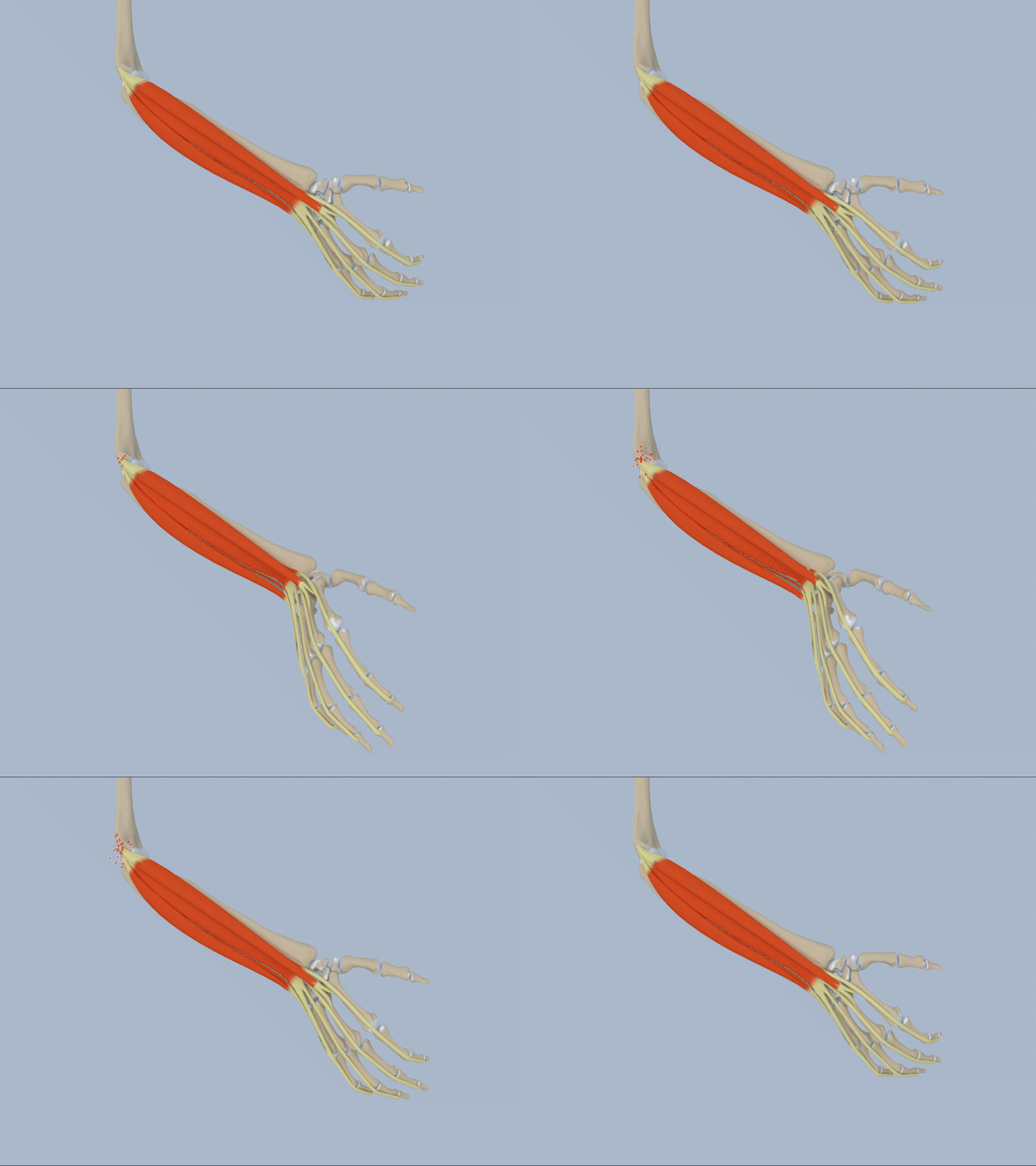
Hi fellow students or curious mind, my name is Antoine and I'm a student in Physical Rehabilitation at Montmorency College. I have been in this program for almost 3 years now. In this program, I learned how to take care of a patient who can have disorder with muscles, bones, joints, neurological system, respiratory system, circulatory system, or cardiac system. I made a glossary with 20 items about anatomy and pathology. This glossary will help you to learn what we can see every day in physiotherapy. I hope you will find it interesting and have a good time learning new things.
I found my definitions on : Physiopedia
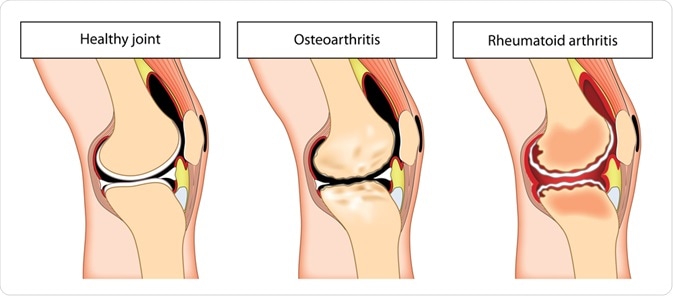
arthritis
noun
Arthritis is the swelling and tenderness of one or more of your joints. The main symptoms of arthritis are joint pain and stiffness.
Example: Knee arthritis can make it hard to do many everyday activities, such as walking or climbing stairs.
fr: arthrite
bone
noun
A bone is a rigid tissue that constitutes part of the vertebrate skeleton in animals. Bones protect the various organs of the body, produce red and white blood cells, store minerals, provide structure and support for the body, and enable mobility.
Example: These minerals are found in bone and are vital to maintain good bone health and reduce the risk of osteoporosis.
fr: os
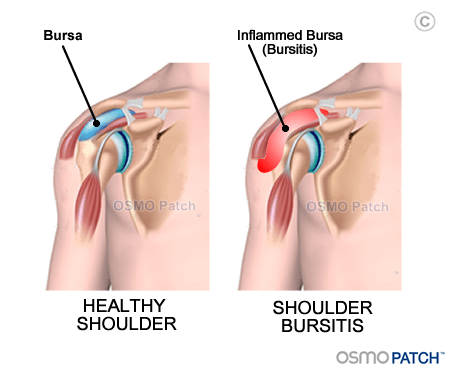
bursa
noun
A fluid-filled sac or sac like cavity, especially one countering friction at a joint.
Example: A body has more than 140 bursae.
fr: bourse
bursitis
noun
Bursitis is a painful condition that affects the bursa. Bursitis occurs when bursae become inflamed.
Example: Some people are at higher risk for shoulder bursitis because they use their shoulders more than others.
fr: bursite
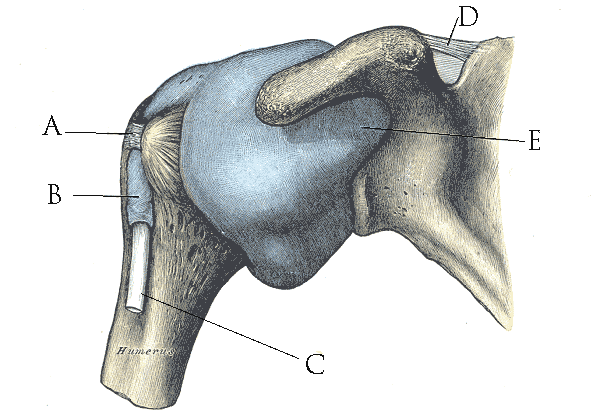
capsule
noun
The sac like envelope that encloses the cavity of a synovial joint by attaching to the circumference of the articular end of each involved bone.
Example: To help your shoulder move more easily, synovial fluid lubricates the shoulder capsule and the joint.
fr: capsule
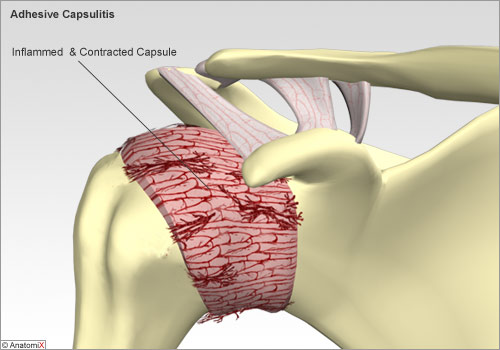
capsulitis
noun
Inflammation of the capsule of the joint.
Example: Frozen shoulder, also known as adhesive capsulitis, is a condition characterized by stiffness and pain in your shoulder joint.
fr: capsulite
dislocation
noun
A joint dislocation is a complete separation of 2 articulating bony surfaces(joint), often caused by a sudden impact to the joint.
Example: A shoulder dislocation is an injury that happens when the ball pops out of your socket.
fr: luxation
fracture
noun
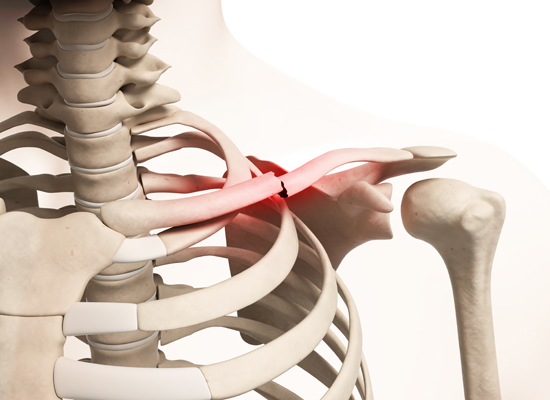
A bone fracture is a medical condition in which there is a partial or complete break in the continuity of the bone.
Example: A Clavicle fracture can be treated by wearing a sling to keep the arm and shoulder from moving while the bone heals.
fr: fracture
hemiplegia
noun
Hemiplegia is a condition, caused by a brain injury, that results in a varying degree of weakness, stiffness (spasticity) and lack of control in one side of the body.
Example: Whilst on placement at a stroke unit I was caring for 39 year old Mark, who was 6 days post stroke and had right-sided hemiplegia.
fr: hémiplégie
joint
noun
The area where two bones are attached for the purpose of permitting body parts to move.
Example: He used to suffer from joint pains due to the strain his sport placed on his body.
fr: articulation
ligament
noun
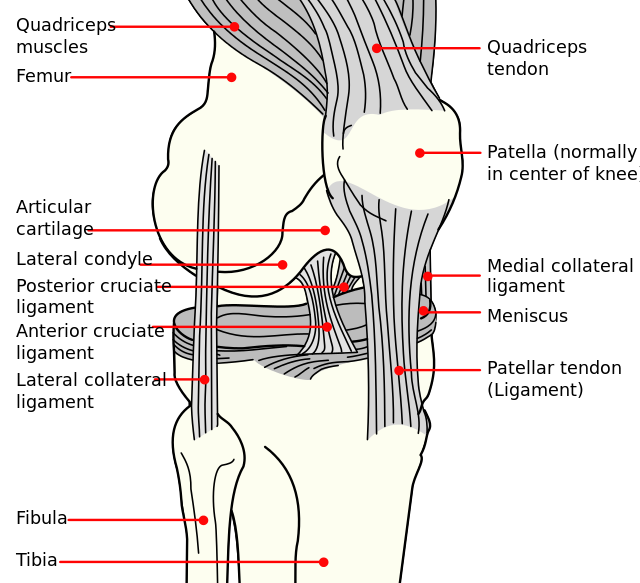
In anatomy, the word ligament usually means the fibrous tissue that joins bones to other bones or cartilages. A ligament is a short band of tough fibrous connective tissue made of long, stringy collagen fibers. Ligaments join bones to other bones to form a joint.
Example: The most common torn ligaments are knee ligaments and ankle ligaments.
fr: ligament
muscle
noun
A band or bundle of fibrous tissue in a human or animal body that has the ability to contract, producing movement in or maintaining the position of parts of the body.
Example: The nerve junction stays in a continued state of excitation, causing constant muscle contraction.
fr: muscle
nerve
noun
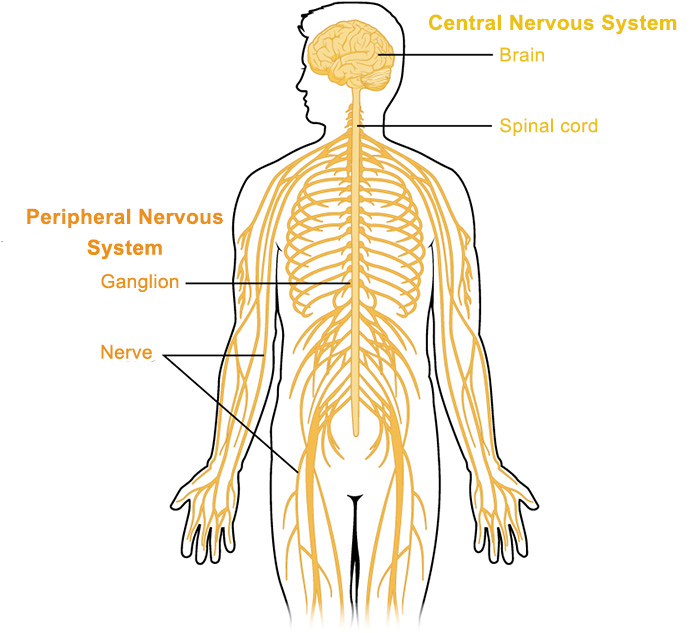
In the body a whitish fiber or bundle of fibers that transmits impulses of sensation to the brain or spinal cord, and impulses from these to the muscles and organs.
Example: Alice already shows signs of nerve damage (neuropathy) in her lower limbs in the form of an infected foot blister which she had failed to notice.
fr: nerf
neuropathy
noun
Disease or dysfunction of one or more peripheral nerves, typically causing numbness or weakness.
Example: Some 60% to 70% of people with diabetes experience neuropathy.
fr: neuropathie
paraplegia
noun
Paralysis of the legs and lower body, typically caused by spinal injury or disease.
Example: There may be occasions where paraplegia does not fully affect both legs.
fr: paraplégie
posture
noun
The position in which someone holds their body when standing or sitting.
Example: The key to good posture is the position of the spine.
fr: posture
quadriplegia
noun
Quadriplegia refers to paralysis from the neck down, including the trunk, legs and arms. The condition is typically caused by an injury to the spinal cord that contains the nerves that transmit messages of movement and sensation from the brain to parts of the body.
fr: quadraplégie
sprain
noun
The result of a wrench or twist of the ligaments of a joint.
Example: A sprained ankle is an injury that occurs when you roll, twist or turn your ankle in an awkward way.
fr: entorse
tendinitis
noun
Inflammation of a tendon, most commonly from an overuse but also from infection or rheumatic disease.
Example: The tennis player risks elbow tendinitis, which is pain on the outside of the elbow.
fr: tendinite
tendon
noun
A tough cord or band of dense white fibrous connective tissue that unites a muscle with some other part (such as a bone) and transmits the force which the muscle exerts.
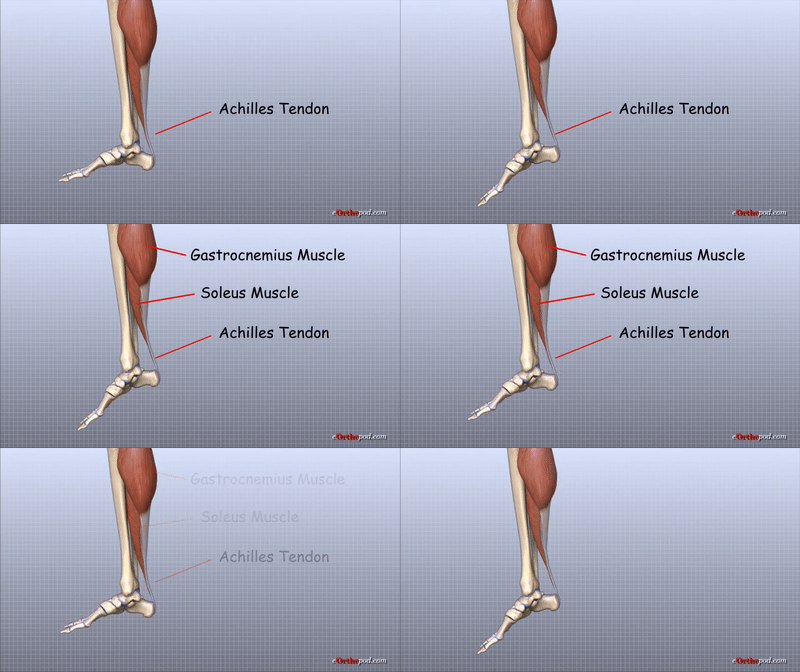
Example: The Achilles tendon is a tough band of fibrous tissue that connects the calf muscles to the heel bone (calcaneus).